The Moon in Your Living Room: Simple, Free Ways to Teach Something Big
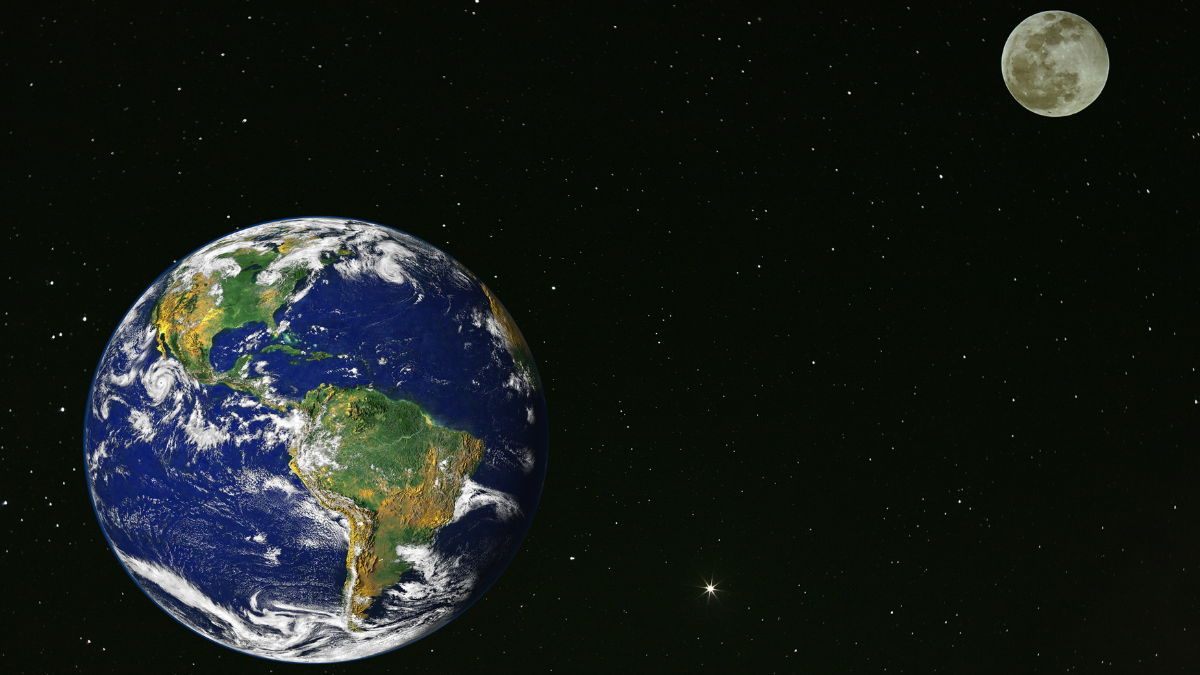
You don’t need a telescope, you don’t need an expensive science kit... and you definitely don’t need to turn your whole kitchen into NASA Mission Control.
Sometimes all it takes is a flashlight, a ball, a clear night, and one really good question.
Why do we always see the same side of the Moon?
That one question can lead to moon phases, gravity, tides, craters, space travel, and a hundred other things you suddenly want to know.
So, if the Moon has caught your attention, here are a few simple ways to take a quick trip there without ever leaving home.
🌙 Start with the Kind of Moon Facts You’ll Remember Later
Some facts disappear from your brain five minutes after you read them. Others make you stop and say, “Wait… really?”
The Moon has plenty of those.
- The Moon doesn’t make its own light. It reflects light from the Sun.
- It takes about 27 days for the Moon to orbit Earth.
- The Moon’s gravity helps create Earth’s ocean tides.
- The Moon has almost no weather like we have on Earth, so marks on its surface can stay there for a very long time.
- A full Moon usually rises around sunset.
- The far side of the Moon is not always dark. It gets sunlight too—we just don’t normally see that side from Earth.
- The Moon is slowly moving farther away from Earth.
You don’t have to learn all of that at once.
Pick one fact. Make a guess. Ask a question. See where it takes you.
That’s where the best learning begins.
🔦 Make the Moon Move Across Your Living Room
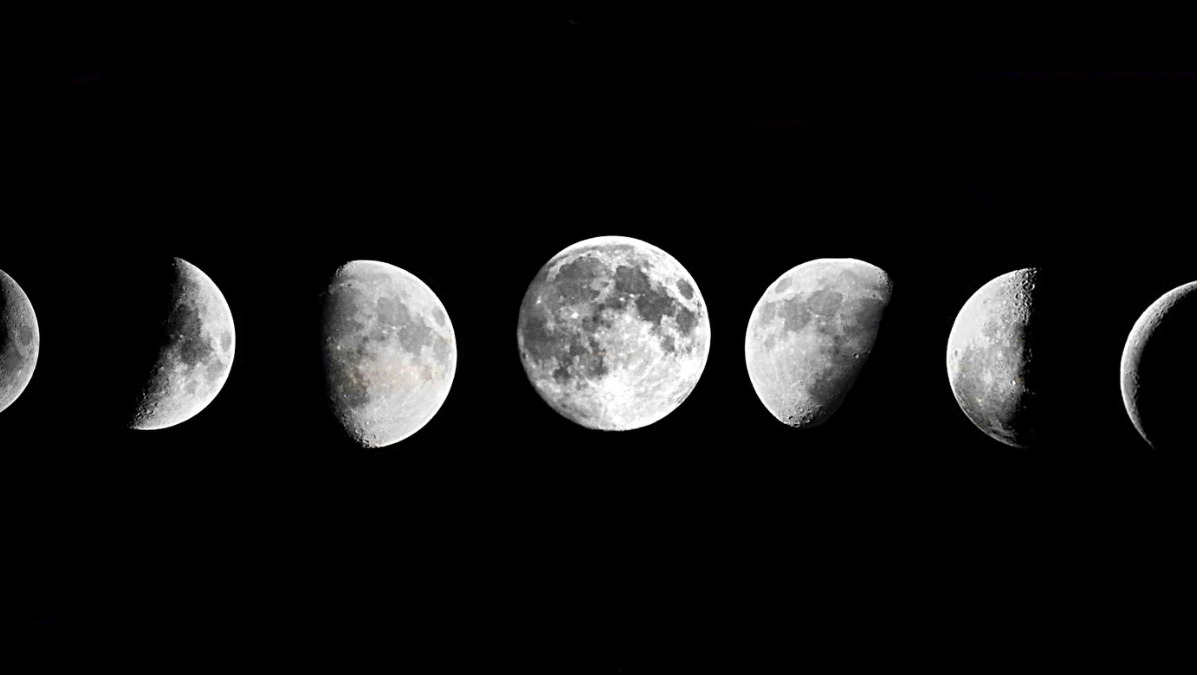
Want to see the Moon’s phases instead of just reading about them? You can make a tiny model of the Sun, Earth, and Moon right in your living room.
You’ll need:
- A lamp or flashlight for the Sun
- A ball for the Moon
- You to be Earth
Darken the room a little.
Hold the ball out in front of you and slowly turn in a circle.
If you need a helper, ask an adult or sibling to hold the flashlight.
As you move, watch how the bright part of the ball changes from your point of view.
That changing light is similar to what happens when we see the Moon’s phases from Earth.
Suddenly something that can feel confusing on a worksheet starts to make a lot more sense.
🌘 Become a Moon Watcher
For the next few evenings, step outside and look for the Moon. That’s it!
You can make this as simple or fancy as you want.
Try:
- Sketching its shape
- Writing the date
- Noticing where it is in the sky
- Recording what time you saw it
- Writing down one thing you noticed
- Adding one question you still have
After a few nights, compare your drawings.
- Has the shape changed?
- Was the Moon in the same place?
- Did you see it at the same time?
Scientists learn by noticing things carefully... You can too.
🌕 Watch a Moonrise
This might be my favorite Moon activity because it doesn’t really feel like an activity.
- Find out when the Moon will rise.
- Grab a blanket or a warm drink.
- Then go outside and wait.
There’s something different about watching the Moon come over the horizon when you stop thinking of it as just a light in the sky and remember:
That is another world.
A world more than 200,000 miles away.
📝 Keep a Tiny Moon Journal
This does not need to become a huge project.
One page is enough. You can draw the Moon, write one thing you noticed, add one thing you learned, and then write down one question you still have.
Done.
If you keep doing that for a few nights, you’ll start noticing patterns you might have missed before.
🎨 Take a Quick Trip to the Moon
Want something quiet to color while you explore?
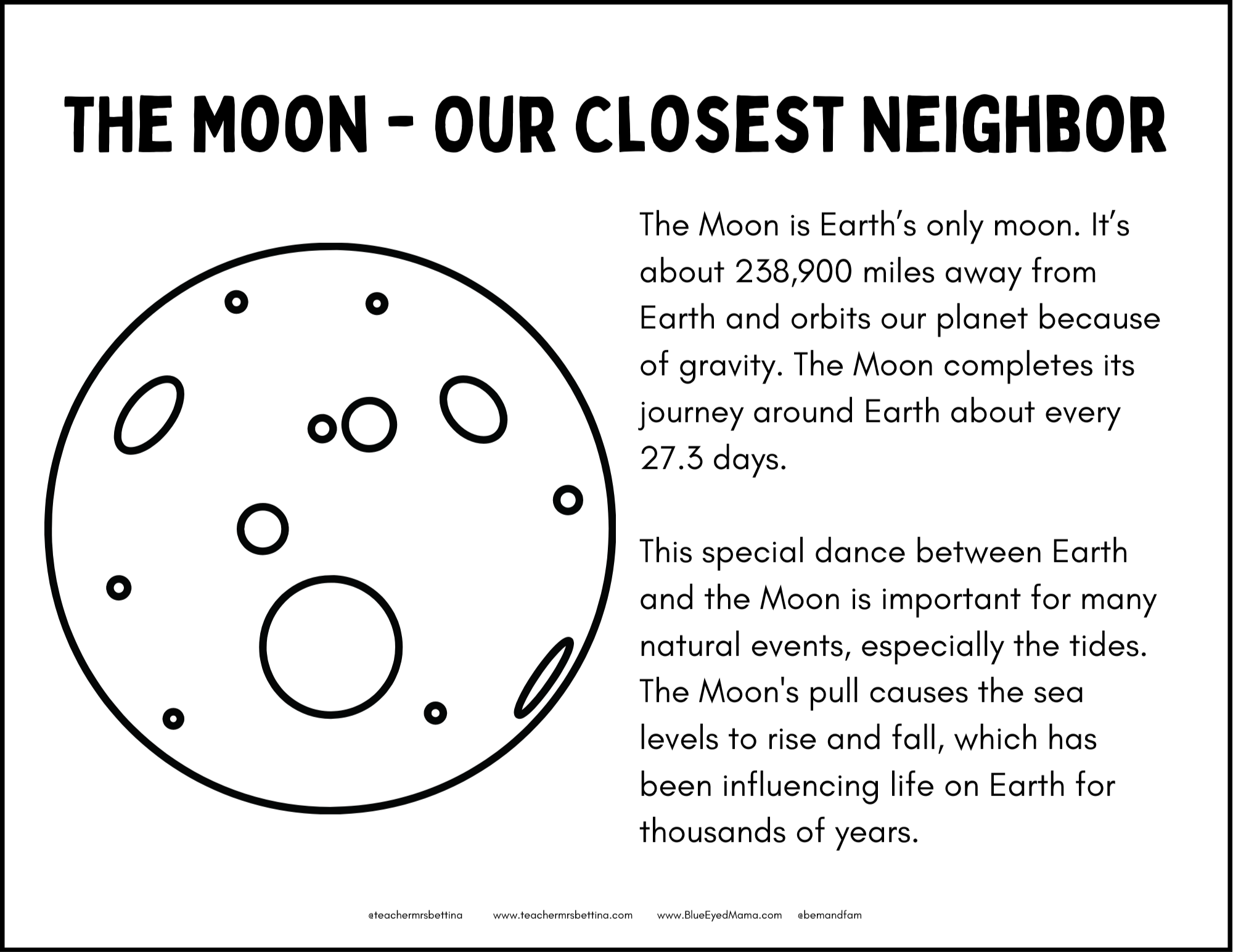
I created a free Moon coloring + fact page you can print at home.
Color the Moon, read a few simple facts, and see what questions pop into your head along the way.
📚 Want to Explore from the Couch?
A good Moon book can take one question and turn it into ten more.
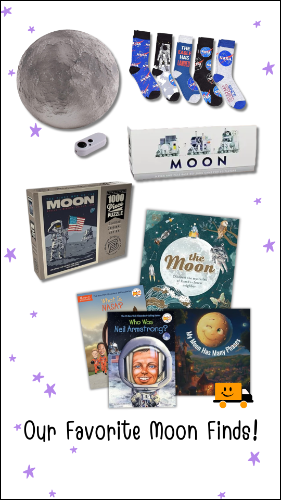
Try a picture book, a nonfiction space book, an astronaut story, or a big space atlas.
You can find a few of my Moon and space favorites here:
Allow bedtime to stir up imagination and wonder!
Heads up: I’ve included a few Amazon links to the things we used. As an Amazon Associate, I earn from qualifying purchases, but it doesn’t cost you anything extra.
🚀 Ready for a Bigger Moon Mission?
If you’ve moved past:
“That’s cool.”
and into:
“Tell me MORE.”
There’s a deeper Moon study waiting for you. You can explore things like:
- Moon phases
- Craters
- The Moon landing
- Space exploration
- Creative activities
- Hands-on science
- More ways to investigate our closest neighbor
Grown-ups can explore the full Moon unit here:
🛰️ Head Back to Mission Control
The Moon is only one stop.
At Mission Control, Space Explorers can find more activities, challenges, Kahoots, free resources, and deeper missions covering the Sun, planets, and the rest of our Solar System.
You might:
- Figure out what you would weigh on another planet
- Build something powered by the Sun
- Test your space knowledge
- Explore a new planet
- Try a hands-on science challenge
There is always another mission waiting.
🌌 One Last Thought
Some of my favorite learning memories with my own kids didn’t start with a worksheet.
They started outside. We watched the Moon. We learned constellations.
We looked things up because somebody asked a question none of us knew the answer to.
Before long, the books became more interesting because the sky had become more interesting first.
That’s what I hope activities like these do.
Not teach you every single fact about the Moon in one afternoon... just open the door to the imagination!
Allow big questions and ask big questions! Happy exploring!
🚀 Mrs. Bettina
Mission Control Commander